


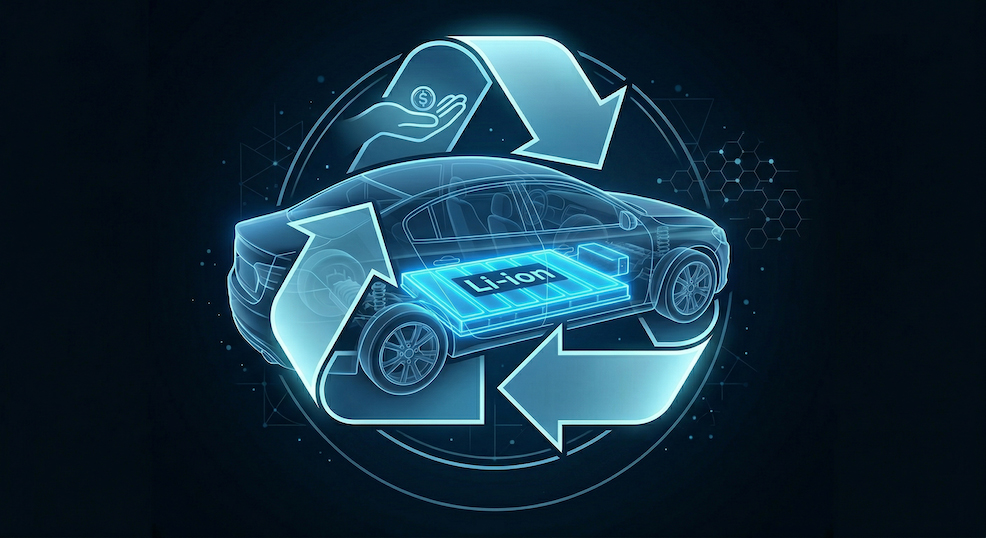
As electric mobility expands across Asia and the Pacific, managing electric vehicle (EV) batteries at the end of their life is emerging as a critical sustainability and policy issue. This topic was examined at the Regional Meeting and Workshop on Unlocking Finance for Scaling Up E-Mobility in Asia and the Pacific, held in Bangkok, Thailand on 1-4 December 2025. The session ‘Creating Opportunities through Battery Management and Circularity’ examined how countries can prepare for growing volumes of used EV batteries while minimizing environmental risks and supporting circular-economy outcomes.
The session highlighted that EV deployment in the region, particularly for two- and three-wheelers and public transport fleets, is accelerating faster than regulatory frameworks and infrastructure for battery end-of-life management. As the United Nations Environment Programme (UNEP) presented, large volumes of EV batteries are expected to reach the end of their first life within five to ten years. Without early planning, these batteries risk entering informal waste streams, posing safety and environmental risks and resulting in the loss of valuable materials, potentially undermining the environmental benefits of e-mobility.
Despite ambitious EV adoption targets, many countries lack comprehensive policy frameworks for battery lifecycle management. The session pointed to fragmented regulations, unclear allocation of responsibilities across the battery value chain, and limited enforcement capacity as persistent challenges. Further, the discussions underscored the need to integrate battery end-of-life considerations into national e-mobility strategies at an early stage. Participants also highlighted persistent infrastructure and capacity gaps in most countries of the region, including limited systems for battery collection and safe transport, insufficient diagnostic and testing facilities, and underdeveloped recycling capacity. The policy and infrastructure gaps are particularly important in Pacific Island states, such as Papua New Guinea.
Experience from the Republic of Korea highlighted the importance of clear safety standards, certification systems, and extended producer responsibility mechanisms. Indonesia emphasized the importance of stakeholder mapping, in order to assign roles for each player in the EV battery management ecosystem for effective implementation of policies. Further, the speakers identified the need to investment early enough in recycling and end-of-life-related infrastructure. As an example, Malaysia is already preparing to build four battery waste management facilities.
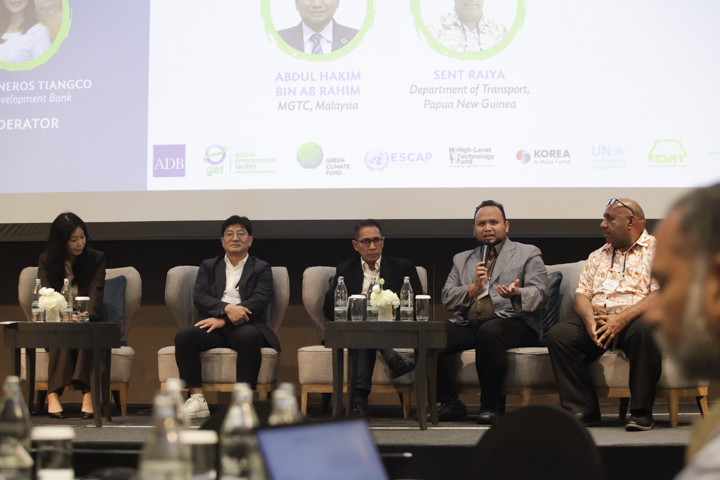
Panelists during the session on "Creating Opportunities through Battery Management and Circularity", held as part of the Regional Meeting and Workshop on Unlocking Finance for Scaling Up E-Mobility in Asia and the Pacific in Bangkok, Thailand from 1-4 December 2025.
The following three considerations were gathered from the session to guide governments in their journey towards sustainable battery management:
1. Giving batteries a second life through a lifecycle approach
Speakers emphasized that battery circularity extends beyond recycling alone and requires a lifecycle approach considered at all stages of the battery development and use. This includes designing batteries for durability and recyclability, enabling repair and reuse, and supporting second-life applications once batteries no longer meet EV performance requirements. Evidence shared during the session showed that batteries can continue to deliver value in less demanding applications, such as stationary energy storage, when supported by appropriate technical standards, with recycling applied only after reuse options are exhausted.
2. Early investment in both physical infrastructure and digital systems is required
Further, the speakers considered it important to that countries invest in dedicated testing, grading, and repurposing facilities, supported by skilled personnel and clear safety protocols. Early investment was seen as essential to avoid future bottlenecks as battery volumes increase. The session underscored the importance of battery traceability as a foundation for safe and transparent battery management.
Digital tools, including battery passports, can capture information on battery origin, chemistry, performance, and ownership throughout the lifecycle, supporting regulatory oversight and safer reuse and recycling. Traceability was identified as increasingly important for cross-border management of used EVs and batteries, as international trade in used vehicles continues to grow. Battery screening and feasibility assessment processes were highlighted by Malaysia as key for efficiently repurposing used batteries for second-life applications.
3. Regional cooperation will be a valuable tool
The session emphasized that battery end-of-life challenges cannot be addressed by individual countries alone. Regional cooperation was identified as essential to support harmonized technical and safety standards, shared approaches to producer responsibility, and the development of regional recycling hubs. Such cooperation can help achieve economies of scale, reduce costs, and enable smaller markets to participate in circular battery value chains. This was noted as particularly relevant for Pacific Island States, for increased economies of scale in terms of both infrastructure and policy development.
The session concluded that battery end-of-life management should be viewed not only as a risk to be mitigated, but as an opportunity to support circular-economy development, create new industries, and strengthen the long-term sustainability of e-mobility systems. Early and coordinated action through policy development, standards, and infrastructure investment will be needed. However, to facilitate this enormous challenge, it will be helpful for governments to apply a lifecycle lens, ensure investments in both physical and digital infrastructure, and leverage on regional cooperation. This way, countries will be better prepared to tackle the growing volumes of EV batteries that will become a reality for the Asia and the Pacific region during the coming decades.
Download the presentations from this session.
