


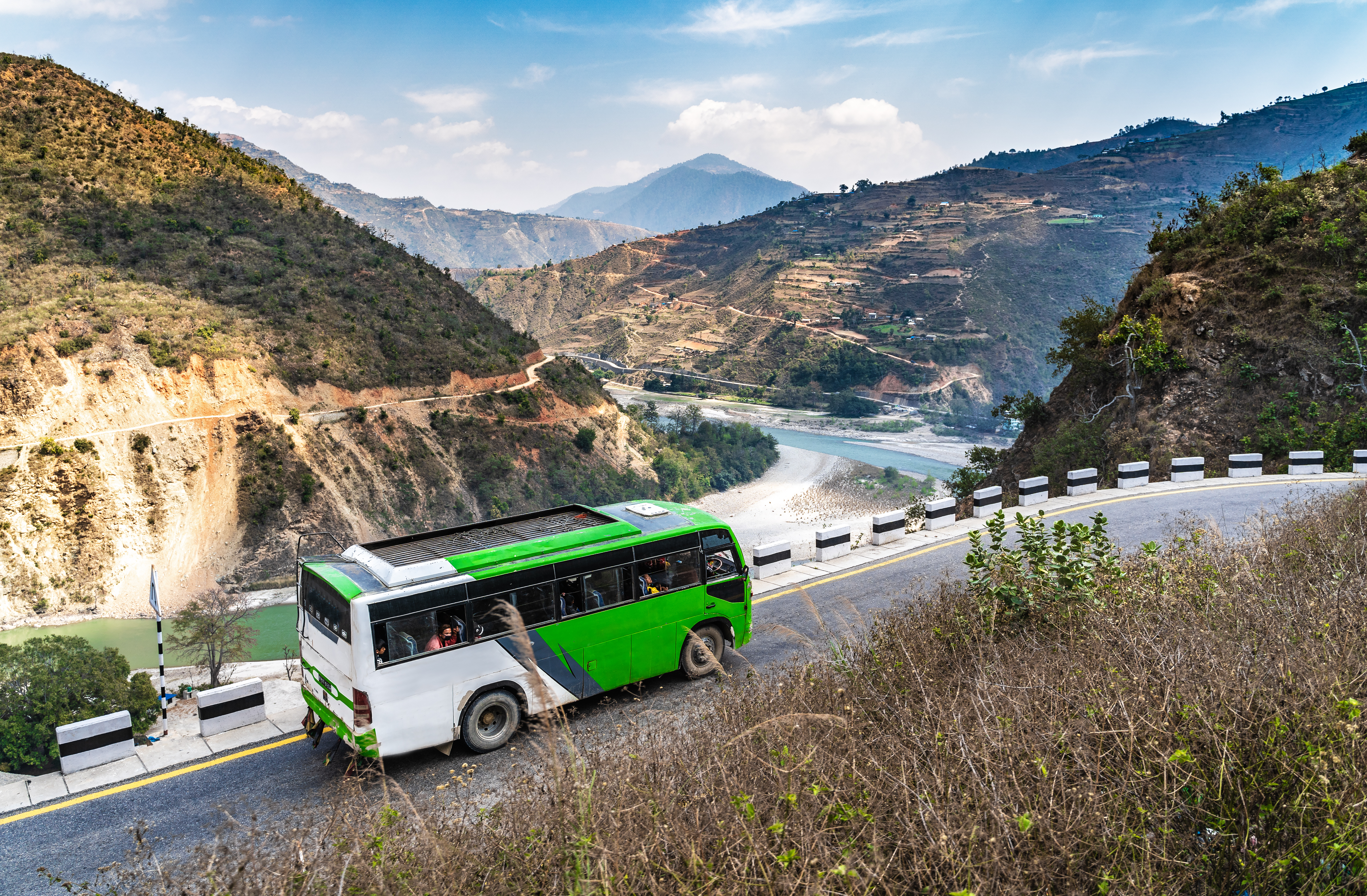
Expanding the adoption of electric vehicles is a national policy in Nepal. Recently, there have been instances that suggest activities targeted toward the deployment of electric buses are gradually taking off. For example, Sundar Yatayat, a private transport company, operates four public electric buses in Kathmandu. Furthermore, ADB supported the procurement of five electric buses to service passengers traveling in Lumbini and Sajha Yatayat, a public transport cooperative, procuring 40 electric buses in its first phase of procurement is expected to be operational by 2022.
Nepal developed provincial technical standard guidelines for small EVs. Equally large EVs, particularly e-buses, are given priority for investments. A number of strategic plans have been prepared by the Government in collaboration with international development partners and private investments. For example, the 2023 plan for E-Bus Rapid Transit, a PPP investment initiative that the Nepal Investment Board is working towards to introduce 75 electric buses.
Other investments include, for example, the Government of Nepal providing three billion Nepalese Rupees (US$ 27.27 million) to procure electric buses for the public transport operator Sajha Yatayat Cooperative. The operator has 71 large and four standard buses in their fleet that serve around 26,000 passengers a day in the Kathmandu Valley. The operator receives 40 Battery Electric Buses (BEBs) through this investment. The plan is to replace the entire fleet with electric buses by 2025.
Similarly, the Lumbini Development Trust a government entity working for the overall development of the Lumbini area has procured 19 electric vehicles (5 buses and 14 vans) under a grant from ADB. The following measures are being undertaken in Nepal to accelerate electric bus adoption,
Formulation of Standards for Electric Vehicles to be Imported into Nepal and for Conversion of fossil-fuelled vehicles into EVs.
Formulation of Test Standards for Electric Vehicles Imported into or assembled/manufactured in Nepal.
Cooperation between government entities and the private sector for the establishment of a network of Charging Stations suitable for multiple types of electric vehicles across the country.
Formulation/revision of Battery Recycling/Management Policy for safe and productive management of different types of batteries used in electric vehicles.
Promotion of battery recycling plants.
Partnership between the federal government, provincial governments, local governments, and private sector for promotion of electric vehicles in public transport under a potential (GCC Gross Cost Contracting (GCC) model.
ORGANIZATION
The public transport in Nepal is mainly composed of informal bus providers, dominated by the private sector with individual service owners. E-bus adoption can be challenging in such an informal sector.
ECONOMY AT SCALE
Significant capital investments are required for the acquisition of electric buses and batteries. Subsequently, the fare level is low to make electric buses more profitable.
INFRASTRUCTURE
An adequate supply of charging infrastructure is needed to mitigate the operating challenges due to difficult terrain, poor road infrastructure and traffic congestion.
