


As Asian cities accelerate efforts to electrify public transport, many governments face a practical challenge: how to turn the goal of transport electrification into financially feasible and scalable projects that can attract development finance and deliver real-world results. In his presentation at the Regional Meeting and Workshop on Unlocking Finance for Scaling Up Electric Mobility (E-mobility) in Asia and the Pacific, on 4 December 2025, ADB’s Arun Ramamurthy highlighted that government-led e-mobility projects are most effective when they are integrated into national programs and designed to address real barriers to implementation. Further, engagement with all key stakeholders needs to be ensured.
A key starting point is recognizing that government-led, or sovereign, e-mobility projects are not just about purchasing electric buses (e-buses). They are public investments that typically involve policy reforms, institutional strengthening, infrastructure development, and long-term operational sustainability. As Mr. Ramamurthy emphasized, a sovereign project should be aligned with a broader “end-to-end” national framework covering policies, institutions, financing mechanisms, and supporting infrastructure, while contributing to low-carbon development and emissions reductions.
One important lesson is that public transport electrification often requires addressing market failures, particularly in countries where bus systems are dominated by fragmented private operators. In many cities, bus fleets are owned by small and medium-sized operators who may only own one or two buses. These operators frequently struggle with high commercial lending rates, strict collateral requirements, and rules requiring large upfront equity contributions. These are factors that make electric bus adoption difficult at scale, especially given the high upfront cost of e-buses.
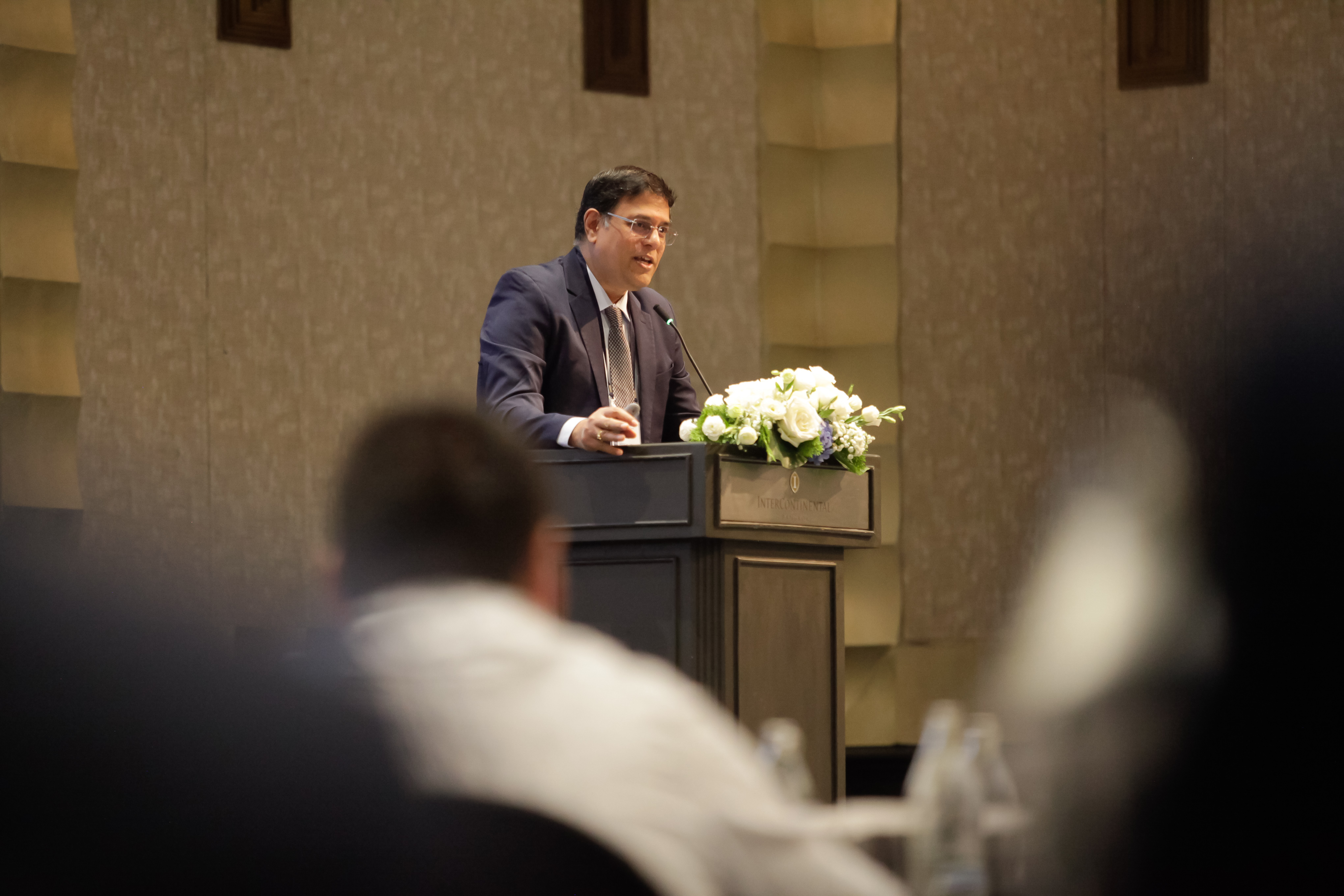
ADB's Arun Ramamurthy (Principal Transport Specialist, SD1) during his presentation at the Regional Meeting and Workshop on Unlocking Finance for Scaling Up Electric Mobility (E-mobility) in Asia and the Pacific in Bangkok, Thailand on 4 December 2025.
A case example from Pokhara, Nepal illustrates how sovereign support can unlock large scale adoption of e-buses even in an environment with smaller bus operators. In Pokhara, public transport is largely operated by private providers in an uncoordinated way, with heavy on-street competition, aging fleets, and weak regulatory oversight. Service quality suffers, operators struggle financially, and the city experiences congestion and inefficiency. Also in administering the transport operations by the city authorities is not efficient, and there is a lack of supportive public transport regulations.
To address this, ADB has supported the development of a structure that combines multiple solutions: organizing operators under a company model through which e-buses are procured, and introducing affordable financing through a financial intermediary that can provide lower interest rates than commercial banks. The project also includes depot and terminal development through the city’s provision of land, apart from potential support mechanisms such as scrappage incentives for old buses.
Another case example was for Thailand, where ADB supports the government in the electrification of intercity buses, among others. This is a segment considered more difficult to electrify due to range anxiety, charging logistics, and bus capacity efficiency. Further, the associated higher risks of intercity bus operations, also affect access to finance and an increase in financing costs.
ADB facilitated overcoming these barriers through a guarantee scheme and a financial intermediation loan that provides financing to financial intermediaries for onlending at their own credit risk. These measures make access more readily available and promote private sector-driven investments in this market segment. Further, the project focused on ensuring that the technology-related barriers could be overcome by ensuring that high-capacity chargers were installed and that the intercity e-bus battery capacity was on par with the demands of the longer driving distances.
Overall, the message was clear: sovereign e-mobility projects succeed when they combine financing solutions, institutional and regulatory reforms, broad stakeholder engagement, and infrastructure planning into one coherent program. Electric buses may be the most visible outcome, but true bankability comes from building a transport ecosystem that makes them work.
Download the presentations from this session.
